
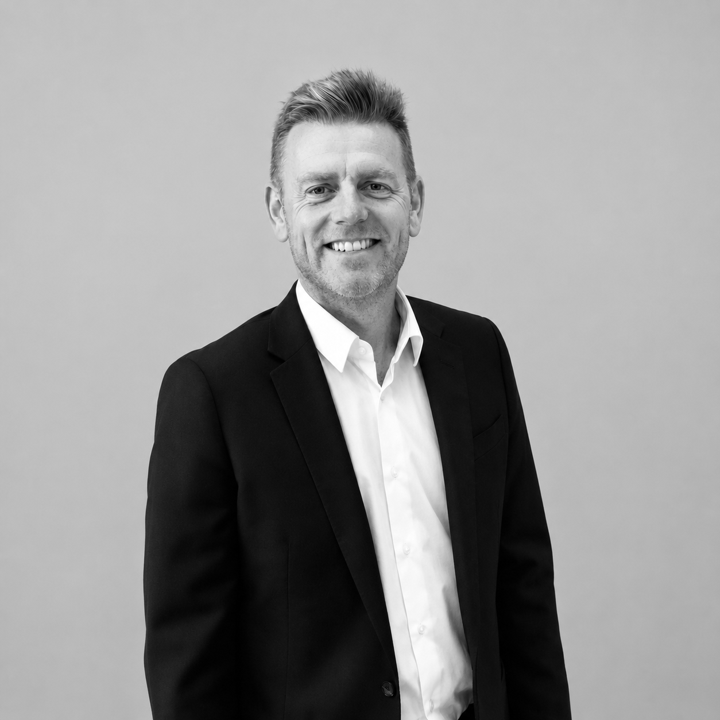
Matt Moore, Group CEO at affordable homes developer, Morro, talks to us about the culture shift behind the business’s science-based emissions target, the practical changes already paying off on site, and the difference having Palatine’s support made along the way.
Can you tell us a bit about Morro: what you do, the nature of your emissions footprint and what prompted you to start looking seriously at setting a decarbonisation target aligned with science and validated by the SBTi?
It’s fair to say this business has been on quite a journey, especially since Palatine became the investor. When I arrived, it was a very traditional West Midlands-based contracting business. Traditional in how it approached its work, traditional in how it approached its people. The culture was deeply embedded and changing it was a huge undertaking.
Morro came about because we wanted to set a new tone, new aspirations, a new feel. We couldn’t do that under the old name. So we engaged a marketing company, told them we wanted a name that captured our purpose – being better tomorrow, making things better for everyone we build for, for our industry. And so Morro was born.
Today we have two main offices, just under 150 staff, turning over around £140 million across at least 25 different construction projects, working with probably 40 to 50 different housing associations and local authorities at any one time.
Because of the nature of what we do, building homes, we have a significant emissions footprint, but we also have a lot of opportunity to show real, tangible change. That made decarbonisation an obvious direction for us. Huge credit to Palatine, and to Nikhita, Steph and Gary, for introducing this thinking to us and for also recognising that we had a huge operational job at the same time. They understood both the opportunity and the challenge.
What did setting a science-based target actually require Morro to do, and why did it feel like the right commitment to make?
On a practical level, it required us to start capturing data in a way the business had never done before. We started with the obvious, easy wins, electric cars, green energy tariffs, that kind of thing. But unless people understand the real reason they’re doing something, those changes are hard to implement and sustain.
What helped was that some of this work was already underway. A few years ago, well ahead of the SBTi commitment, we had embarked on a mission to change how our construction sites think about waste. We had a culture of general waste skips – everything thrown in together, no segregation, no control. It was costing us money, and it was the wrong thing to do. So, we turned that on its head. We empowered site teams to challenge their supply chains and subcontractors to introduce full on-site waste segregation. Timber offcuts into timber skips. It sounds obvious now, but at the time it was a genuine culture shift. We have since had one site that has not used a single general waste skip, something a lot of people said would be impossible.
That kind of progress made the SBTi commitment feel like the natural next step. When you look at everything the business was already doing, it felt achievable. A 42% reduction in Scope 1 and 2 emissions by 2030 is a serious target, but beyond the numbers, it is simply the right thing to do. It makes us a better business. It makes us more attractive to the people we want to recruit. And it gives the whole team a genuine sense of purpose.
How has it changed the way your team operates, and has it had any impact commercially or changed conversations with partners and customers?
Operationally, the shift has been massive. The biggest single change has probably been energy use on site. Historically, you brought in a generator, ran it on diesel, and that was just what happened. Now the business defaults to solar first. We are using PV panels on construction sites and in some cases not needing a generator at all for periods of time. Commercially, it is paying for itself.
The waste piece has also saved us a significant amount of money. Using segregated, specialist skips rather than general waste skips is cheaper, and we have developed some genuinely creative reuse partnerships. We now work with prisons. For example, timber offcuts from the prison are made into benches, bird boxes, and drain covers, and then returned to the site. It sounds modest, but it is commercially beneficial, and it is exactly what we mean when we say we want to make our industry better tomorrow than it is today.
In terms of conversations with partners, our clients, councils, registered providers, and housing associations are becoming much more interested in how we build and what we can report back to them. They want to see what decarbonisation initiatives we have introduced on their sites. That reporting relationship has changed significantly. And we are now being approached by local and combined authorities who want to pilot new schemes with us because they see a genuinely innovative business willing to try things.
With recruitment, too, new people coming into the business regularly say they like what we are doing for the environment. It is becoming part of who we are.
Nikhita was seconded from Palatine to work at Morro. What did that make possible that you don’t think you would have managed otherwise, and how did the secondment work in practice?
Honestly, if Nikhita had not been here, we would not have got to where we are anywhere near as quickly or as well. She made it happen.
She spent the time doing the research that nobody in the business really had the capacity or the expertise to do. She helped us capture data and put in place systems and ways of thinking that suited the specific nature of our business. And our business is not easy. We are not all in one office under one roof. We are spread across dozens of active construction sites. Capturing data in that environment is genuinely complicated, and Nikhita worked through that with us.
She also created something that I would describe as a sustainability team within the business, about half a dozen people who, before this, were not used to thinking in these terms or producing this kind of data. She worked with them, she brought them along, and now they all understand why it matters.
What I will also say is that she was passionate about it, and that passion came through. We are a business full of builders. Walking into a room and talking about Scope 1 and 2 emissions is not a natural conversation in our world. But the way Nikhita approached it, embedded herself with the teams, built real relationships, it worked. Some of those team members are genuinely good friends with her now. That says everything.
More broadly, what has the support from Palatine looked like throughout this, and would you have got to where you are now without it?
I do not think we would. I will be straight about that.
The SBTi commitment has given the business a clear mission and purpose. But getting there required Palatine, and specifically Steph and Nikita, to hold our hands a bit, to keep pushing this forward, to make sure we did not just get to a certain point and stop.
We are now twice the size we were a few years ago. The initiatives we run and the systems we use look very different. And through all of that growth and change, Palatine brought the understanding, the relevance, and the expertise to the business. They helped us embed a culture and an approach to actually make this happen.
I said at our all-staff event last Friday. I stood in front of assistant site managers, and we talked about SBTi. Some of them look at you a bit sideways at first. But then you explain why the business is doing this, what it means for our ability to win new work, what it says about the kind of business we are becoming, and they get it. That shift would not have happened without the support we had from Palatine.